

close
Choose Your Site
Global
Social Media


Marine refrigeration condensers operate in environments filled with salt, moisture, chlorides, vibration, and changing temperatures. These conditions can corrode condenser tubes, fins, joints, and casings, reducing heat-transfer efficiency and increasing the risk of leakage.
Selecting the correct material is therefore essential for reliable operation. This guide compares five corrosion-resistant materials and explains when a marine anti-corrosion stainless steel condenser may be the most practical choice.
A condenser removes heat from high-pressure refrigerant vapor and converts it into liquid. Corrosion on the heat-transfer surface can restrict airflow or water flow, increase condensing pressure, and force the compressor to use more energy.
Marine condenser materials should provide:
Resistance to salt and chlorides
Suitable thermal conductivity
Adequate mechanical strength
Reliable pressure resistance
Compatibility with other metals
Acceptable lifecycle cost
The right choice depends on whether the condenser is exposed to humid coastal air, salt spray, brackish water, or continuous seawater flow.
| Material | Corrosion resistance | Heat transfer | Cost | Best suited to |
|---|---|---|---|---|
| 316L stainless steel | Very good | Moderate | Medium | Humid and corrosion-prone marine environments |
| Duplex stainless steel | Excellent | Moderate | Medium to high | High-pressure and severe chloride conditions |
| Titanium | Excellent | Moderate | High | Critical direct-seawater systems |
| Copper-nickel alloy | Very good | Good | Medium to high | Seawater-cooled condenser tubes |
| Aluminum brass | Good | Good | Medium | Traditional marine condenser systems |
These ratings are general. Actual performance depends on water quality, temperature, flow velocity, pressure, fabrication, and maintenance.
316L stainless steel is widely used in corrosion-resistant refrigeration equipment. Chromium creates a protective surface layer, while molybdenum improves resistance to chloride pitting compared with general-purpose stainless steel.
Good resistance to humidity and many corrosive environments
Strong and mechanically durable
Easy to clean
Suitable for hygienic applications
Can be formed and welded into customized structures
More economical than titanium in many projects
However, 316L is not completely immune to seawater corrosion. Warm, stagnant, or highly concentrated chloride conditions may still cause pitting and crevice corrosion. Surface finish, welding quality, drainage, and cleaning all influence its service life.
Shanghai Sunrise supplies an anti-corrosion stainless steel condenser for refrigeration equipment operating in corrosive environments. Its cooling capacity and dimensions can be customized according to project requirements.
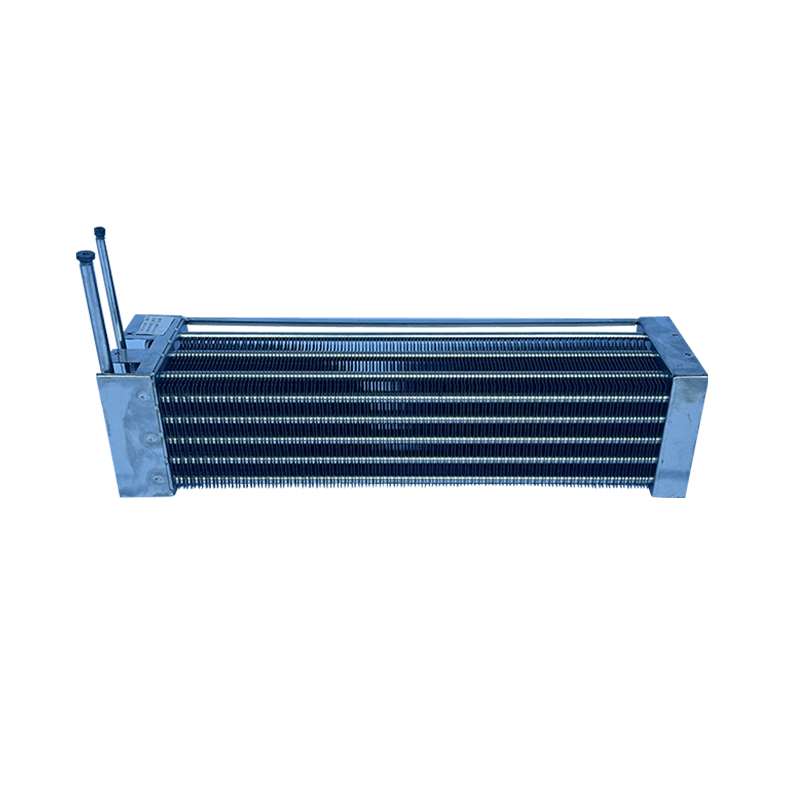
A marine anti-corrosion stainless steel condenser is a practical choice when the project requires a balance of durability, cleanliness, customization, and cost. For continuous direct-seawater exposure, the exact grade and operating conditions must be evaluated carefully.
Duplex stainless steel combines austenitic and ferritic structures. This gives it higher mechanical strength and better resistance to chloride stress-corrosion cracking than many standard stainless steel grades.
Strong resistance to chloride-related corrosion
Greater strength than 316L
Good resistance to stress-corrosion cracking
Suitable for higher-pressure systems
May allow thinner walls in properly engineered designs
Duplex stainless steel is useful when 316L cannot provide sufficient protection. Super duplex grades offer even greater resistance in aggressive seawater environments but have higher material and fabrication costs.
Correct welding is essential because unsuitable heat input can affect the internal structure and reduce corrosion resistance.
Duplex stainless steel is appropriate for offshore equipment, higher-pressure refrigeration systems, and applications where maintenance access is limited.
Titanium is one of the most corrosion-resistant materials for natural and flowing seawater. Its stable oxide layer protects the metal against chloride attack in many marine conditions.
Excellent resistance to seawater corrosion
Strong resistance to pitting
Low density
Long service life
Suitable for critical seawater-cooled condensers
Titanium is often selected when seawater passes directly through the condenser. It can reduce corrosion-related maintenance and replacement in systems where failure would be difficult or expensive to repair.
Its main disadvantage is cost. Titanium and its specialist fabrication are generally more expensive than stainless steel or copper alloys. Its heat-transfer characteristics must also be considered during condenser design.
Titanium is most suitable for critical direct-seawater systems where long service life is more important than the lowest initial price.
Copper-nickel alloys have a long history in marine piping and heat exchangers. Common 90/10 and 70/30 grades form a protective surface film and resist corrosion in flowing seawater.
Good thermal conductivity
Reliable seawater resistance
Established use in marine heat exchangers
Suitable for condenser tubing
Better resistance to biological fouling than many materials
Copper-nickel is often used for tube-based condensers because it combines corrosion resistance with effective heat transfer.
Performance depends on water velocity and quality. Excessive velocity may damage the protective film, while very low velocity can allow deposits and biological growth. The alloy should also be compatible with the tube sheet, shell, fittings, and piping to reduce galvanic corrosion.
Copper-nickel is suitable for seawater-cooled condensers where flow conditions can be controlled.
Aluminum brass is a copper-zinc alloy containing aluminum to improve its seawater corrosion resistance. It has traditionally been used for marine condenser tubes.
Good heat-transfer performance
Suitable mechanical strength
Better seawater resistance than ordinary brass
Established marine service history
Lower initial cost than titanium
Aluminum brass can perform reliably in controlled seawater systems. However, polluted water, deposits, ammonia, and unsuitable water velocity may shorten its service life.
Dezincification and galvanic corrosion should also be considered during system design. Aluminum brass is most suitable for traditional marine refrigeration systems where good heat transfer and moderate cost are priorities.
Choosing among these five materials requires an understanding of the complete operating environment.
First determine whether the condenser is cooled by air, freshwater, treated closed-loop water, brackish water, or seawater.
A condenser exposed only to salty air does not require the same protection as one through which seawater flows continuously. Direct seawater contact generally requires stronger chloride resistance.
High chloride concentration and warm temperatures increase the risk of localized corrosion. Stagnant zones can also concentrate salts, making conditions more aggressive than the average water analysis suggests.
Cooling-water velocity affects both corrosion and fouling. Low velocity encourages deposits, while excessive velocity may damage protective films, especially on copper-nickel and aluminum brass.
The condenser must withstand refrigerant pressure, cooling-water pressure, thermal cycling, and vibration from marine machinery. Material strength, tube thickness, joining methods, and overall construction must meet these loads.
Different metals connected in the presence of seawater can create galvanic corrosion. Tubes, shells, fasteners, fittings, and piping should therefore be evaluated as one complete system.
Purchase price should be compared with expected service life, inspection frequency, cleaning, replacement labor, and downtime.
Titanium may have the highest initial cost but can be economical in critical seawater service. Stainless steel often provides a more balanced option for less aggressive conditions.
| Operating condition | Recommended material |
|---|---|
| Humid coastal air or salt spray | 316L stainless steel |
| Strong chloride exposure and high pressure | Duplex stainless steel |
| Continuous critical seawater cooling | Titanium |
| Controlled flowing seawater | Copper-nickel |
| Traditional marine system with moderate budget | Aluminum brass |
This table provides general guidance only. Final selection should be based on detailed operating data and engineering calculations.
Even the most corrosion-resistant material can fail if the condenser is poorly designed or manufactured.
The design should minimize crevices and stagnant areas where salt and deposits can collect. Welds must use suitable filler materials and controlled procedures. Surfaces should remain clean and free from contamination during fabrication.
Proper drainage is also important. Seawater left inside a condenser during shutdown can become more concentrated as water evaporates, increasing corrosion risk.
Shanghai Sunrise manufactures tube-fin heat exchangers and provides customized refrigeration solutions. Its condenser product range includes stainless steel and fan-assisted products for commercial and industrial systems.
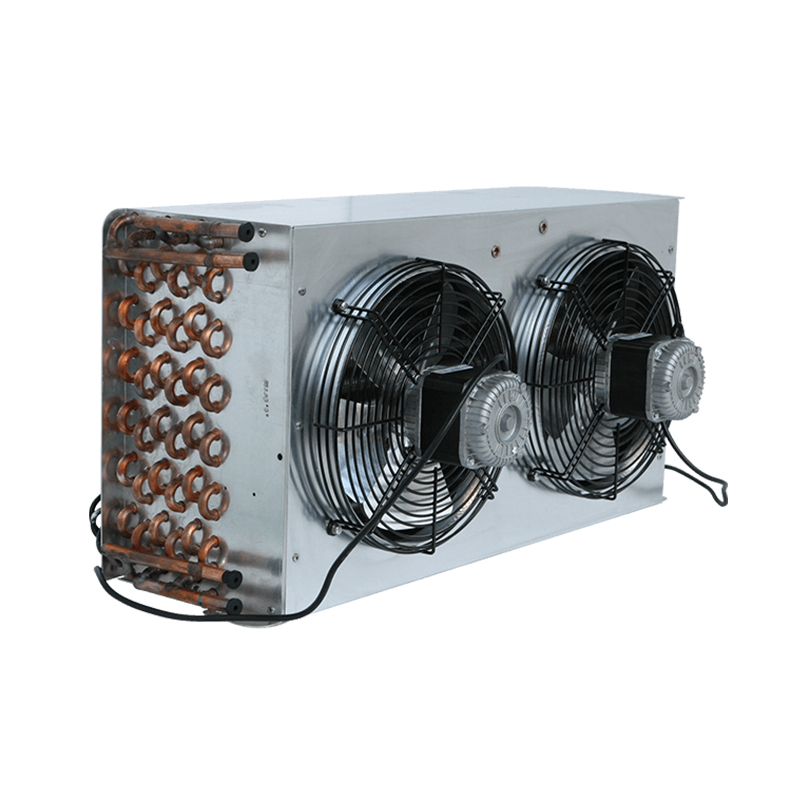
Corrosion-resistant condensers still require regular maintenance:
Rinse salt deposits from exposed surfaces.
Maintain the correct cooling-water flow.
Avoid stagnant seawater during shutdown.
Inspect welds, joints, tube ends, and crevices.
Remove deposits without damaging the surface.
Check for contact between incompatible metals.
Monitor pressure and heat-transfer performance.
Reduced cooling performance may indicate fouling, deposits, restricted airflow, or early corrosion. Early inspection can prevent leakage and equipment failure.
Titanium provides excellent seawater resistance, but it is expensive. Duplex stainless steel and copper-nickel can also perform well when correctly matched to the water quality, pressure, temperature, and flow velocity.
Yes. It is suitable for many humid, salty, and coastal environments. Continuous contact with warm or stagnant seawater requires careful evaluation because chloride pitting may still occur.
Stainless steel provides a practical balance of corrosion resistance, strength, cleanliness, customization, and cost. It is suitable for many corrosion-prone refrigeration applications.
Yes. Salt deposits, stagnant water, surface contamination, and poorly treated welds may still lead to corrosion. Regular cleaning and inspection are necessary.
Yes. Shanghai Sunrise states that the cooling capacity and dimensions of its stainless steel condenser can be customized according to project requirements.
The top five corrosion-resistant materials for marine refrigeration condensers are 316L stainless steel, duplex stainless steel, titanium, copper-nickel, and aluminum brass.
Titanium is ideal for critical direct-seawater systems. Duplex stainless steel combines high strength with strong chloride resistance. Copper-nickel and aluminum brass provide established marine heat-transfer performance. A marine anti-corrosion stainless steel condenser offers a balanced solution for many systems exposed to humid, salty, and corrosion-prone environments.
The final material should be selected according to the cooling medium, chloride level, temperature, water velocity, pressure, galvanic compatibility, and expected service life. Matching the condenser material to the real operating environment is the most reliable way to reduce corrosion and maintain long-term refrigeration performance.


